← Home
Deed Tracker

Project
App Design
Timeline
2 Months
Tools
Figma • Adobe Illustrator
Problem
The Challenge: Staying Consistent in a Busy World
From prayers and duas to charity and good habits, maintaining a daily spiritual routine is a personal goal for many Muslims. But in the fast pace of modern life, it’s easy to forget, lose track, or feel disconnected.
Most tools out there aren’t built with faith-based routines in mind. They either lack personalization, don’t include reminders, or simply aren’t motivating.

Lack of platforms for tracking Good Deeds

Users need flexible and personalized tracking features

Ensuring a seamless and engaging UI/UX to encourage long-term use
Most habit trackers aren’t built for spiritual intention.
There are plenty of generic productivity apps on the market. But they’re often too gamified, too cluttered, or too disconnected from the values and rhythm of a Muslim lifestyle.
The lack of a faith-centered, thoughtfully designed experience leads to inconsistent use or no use at all.
8:00

8:00

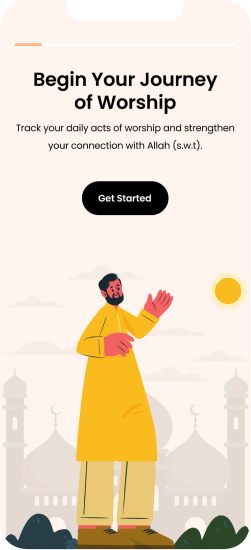
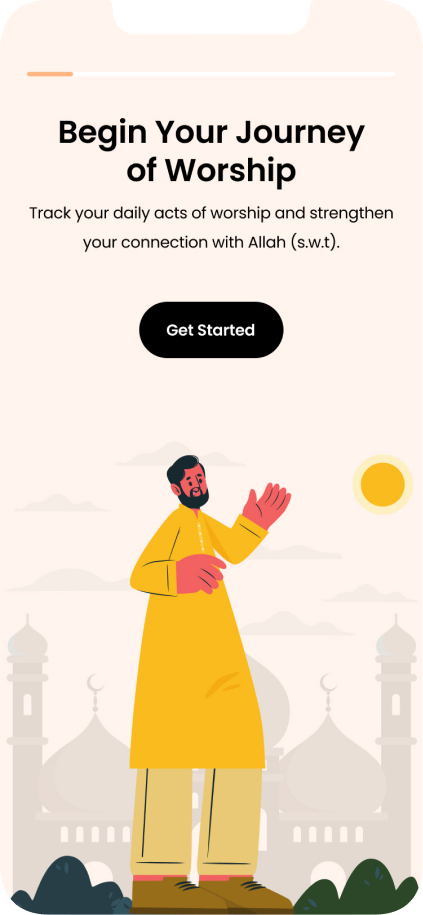
Say hello to Deed Tracker!
Solution
A personalized space to build habits that matter.
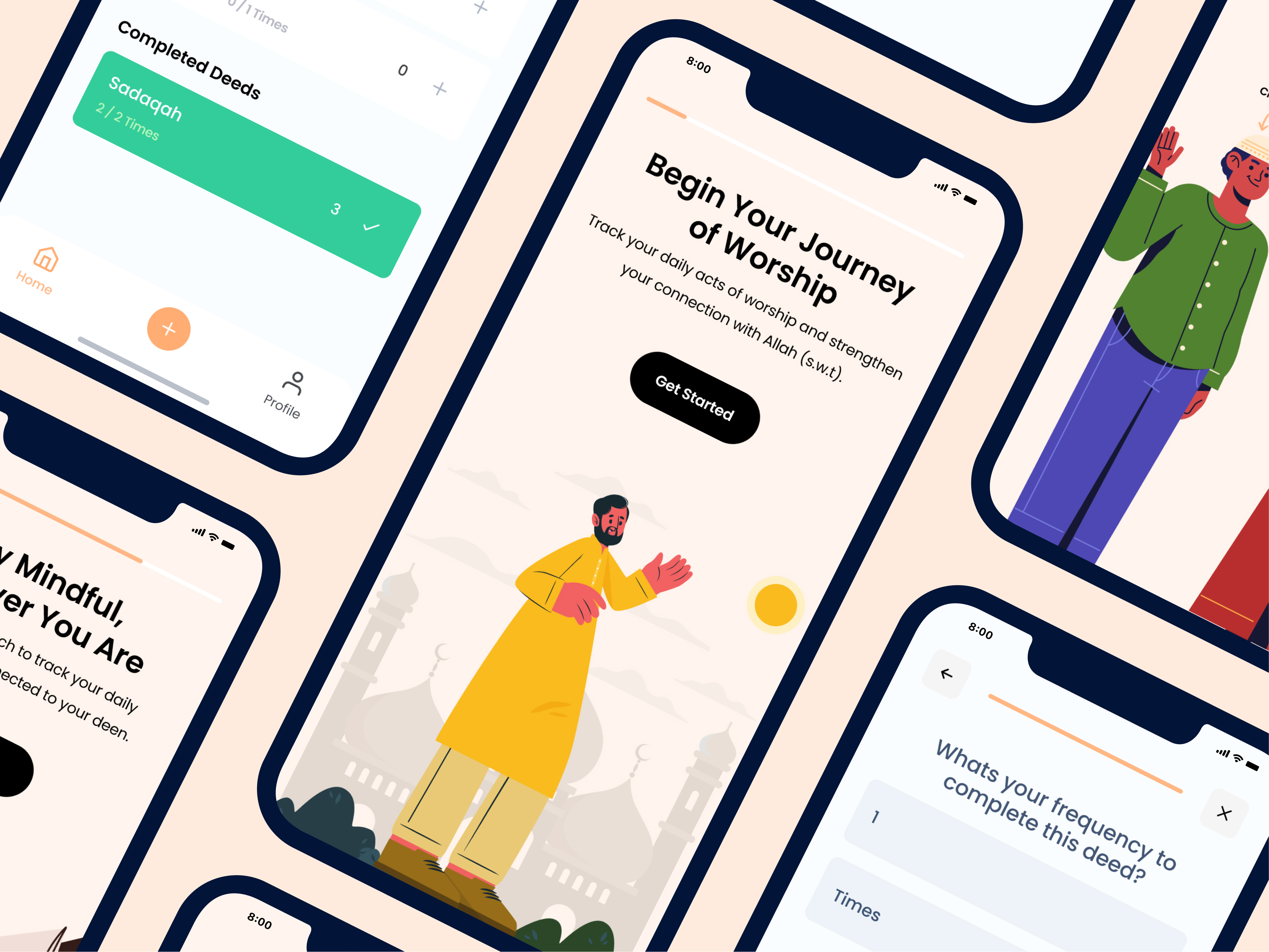
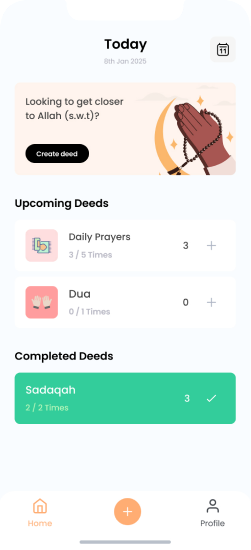
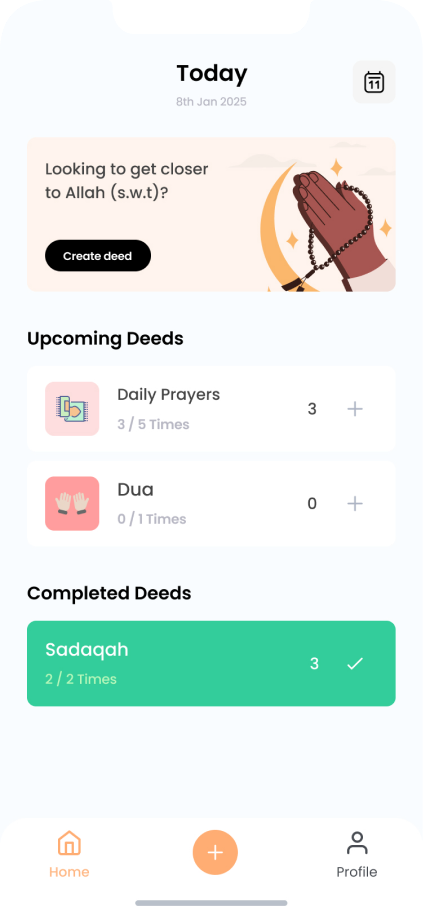
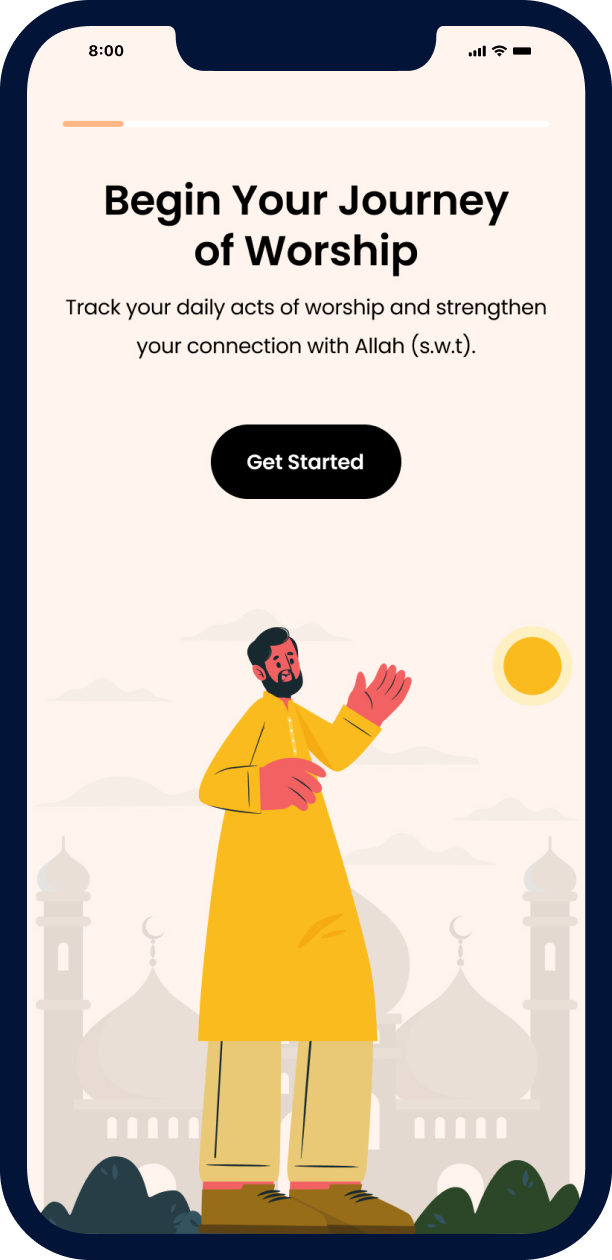
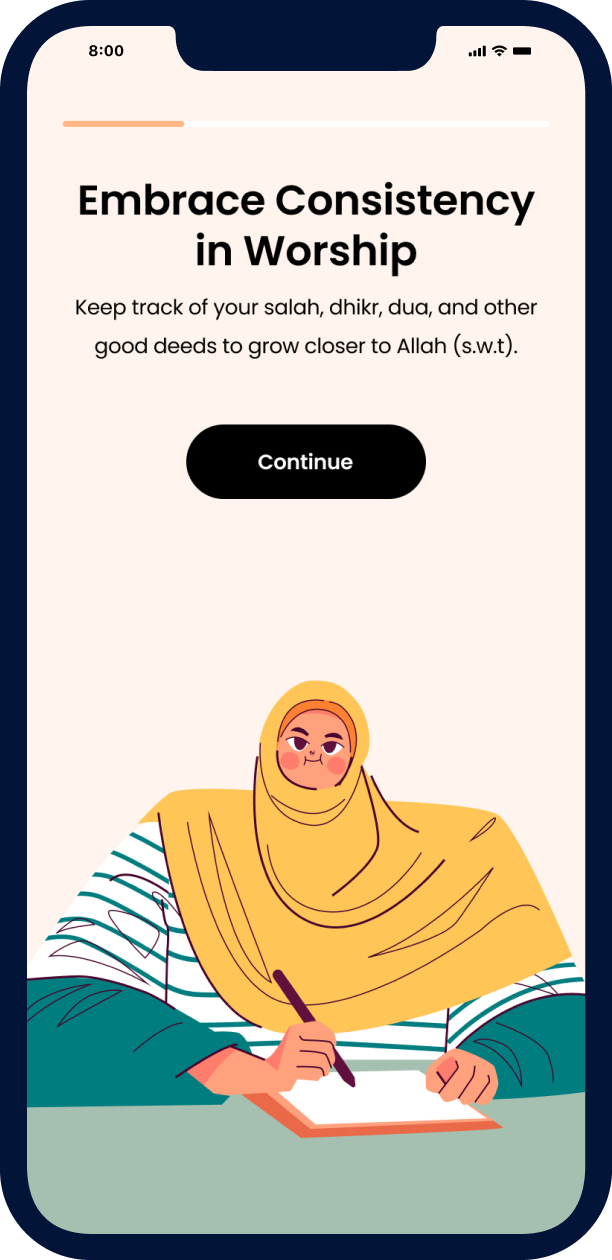
Deed Tracker fills the gap with a clean, minimal app that focuses solely on spiritual habits. Users can log their deeds, set custom reminders, and visualize their consistency — all in a calming, distraction-free interface designed for self-reflection.
8:00

8:00
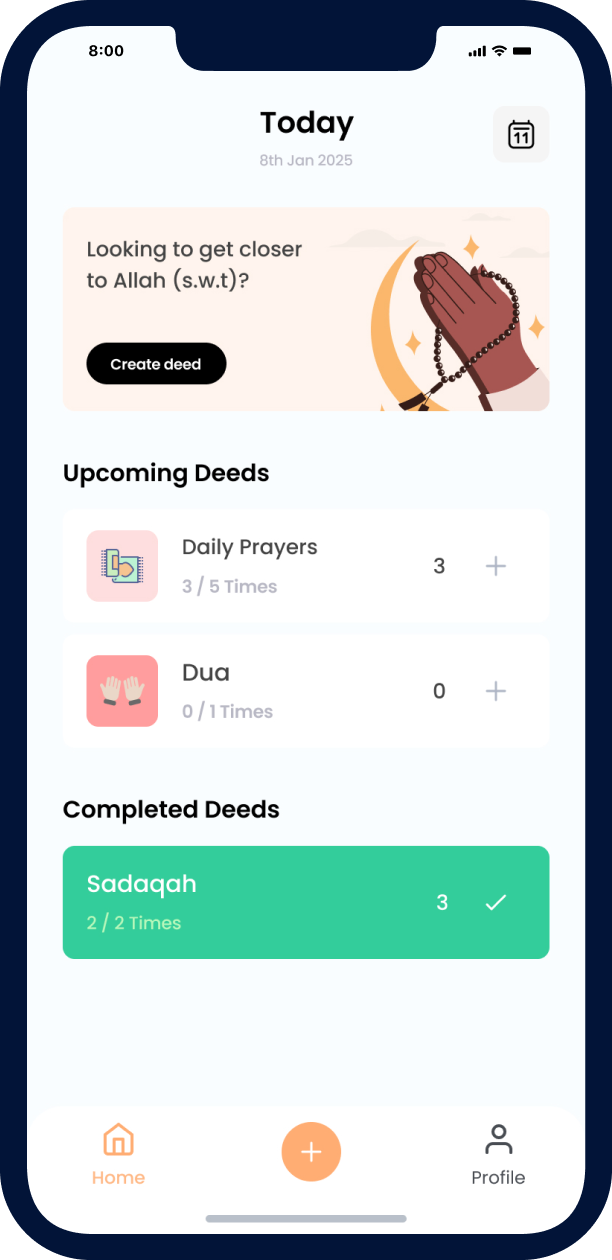
Set daily goals and track them
Process
Building an interactive app
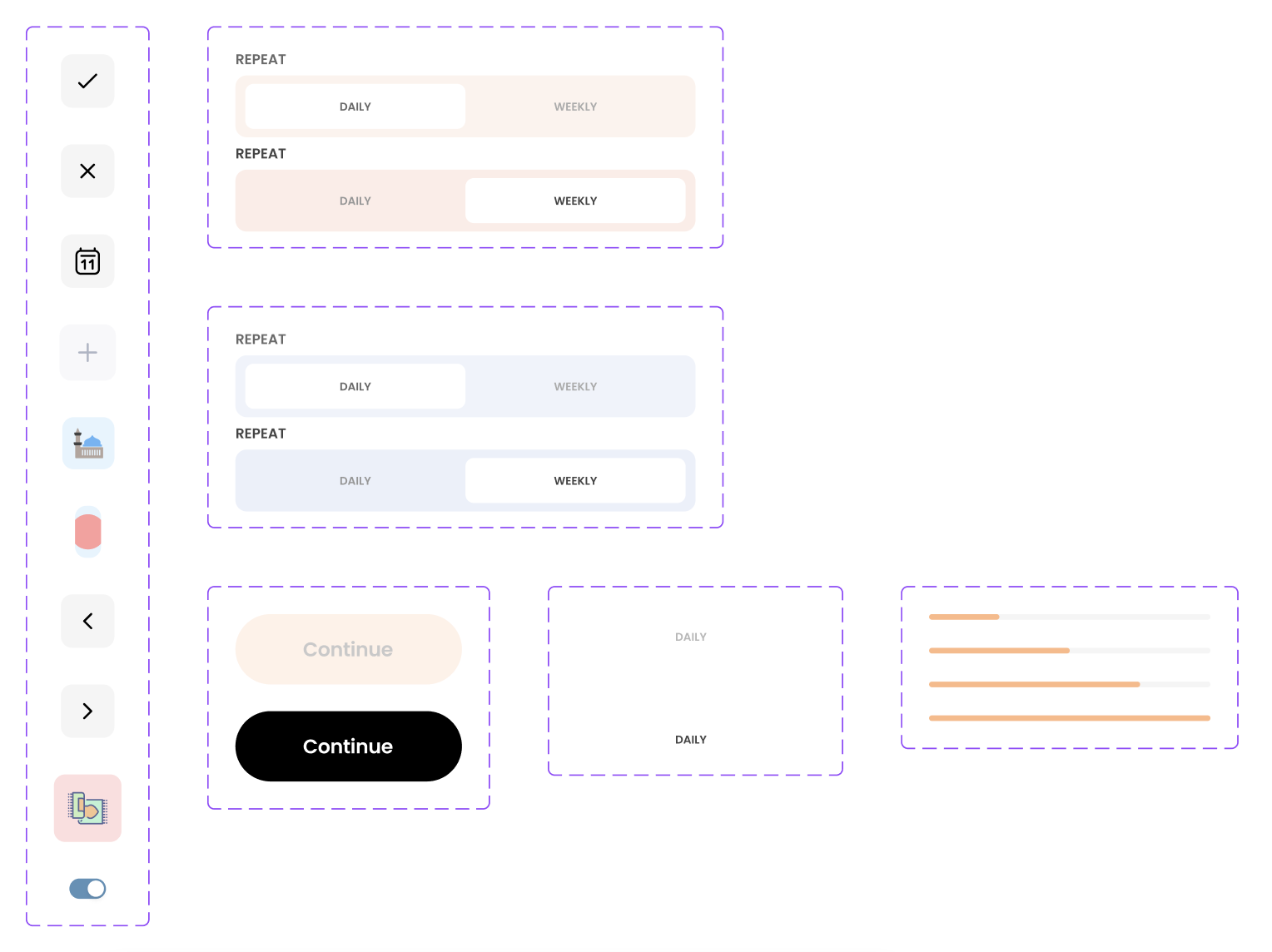
Creating a spiritually mindful app meant designing with both clarity and compassion. I focused on building modular, reusable components that supported quick, intuitive tracking while respecting the tone of Islamic spiritual habits.
This approach made the app consistent across screens, allowed easier scaling later, and reduced cognitive load for users who were already managing busy schedules and personal goals.
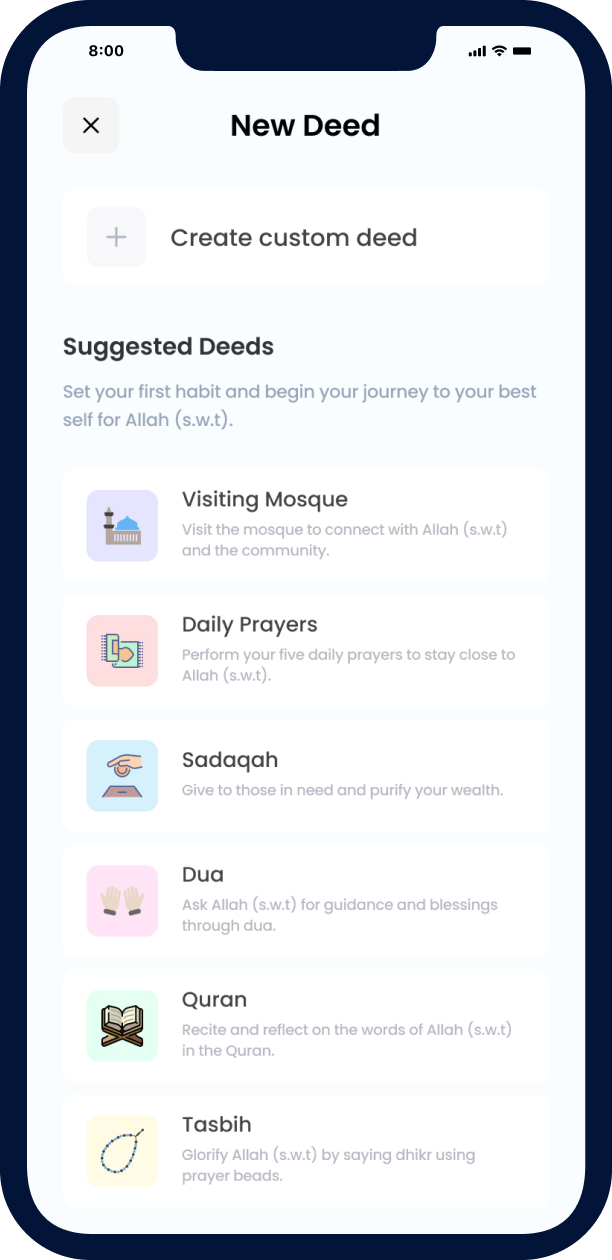
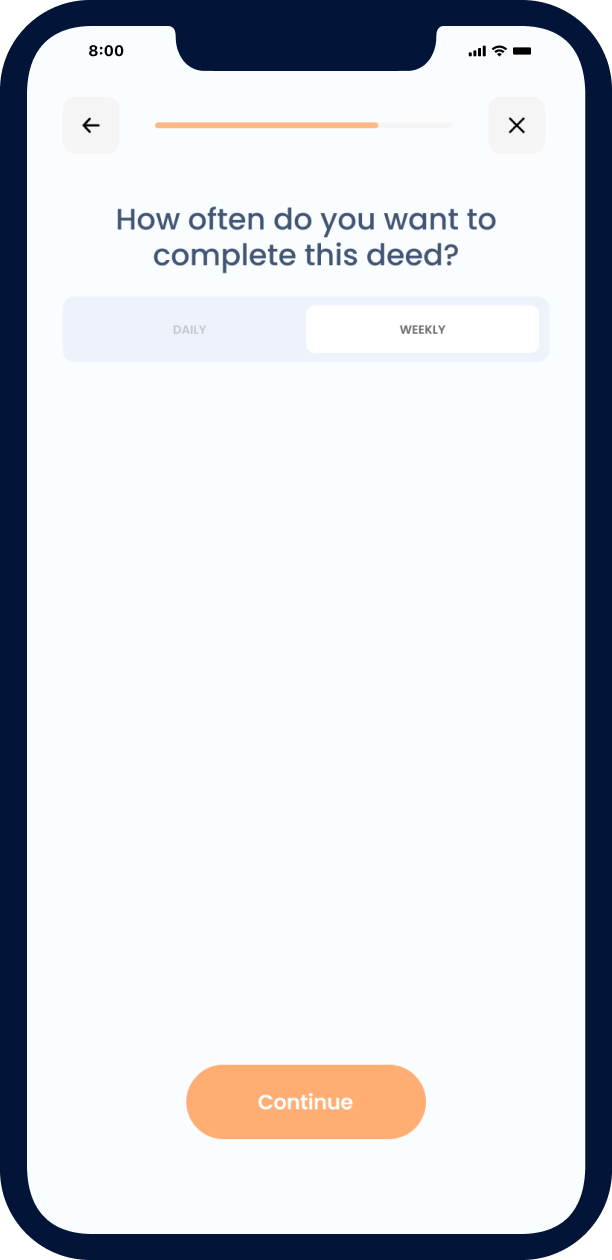
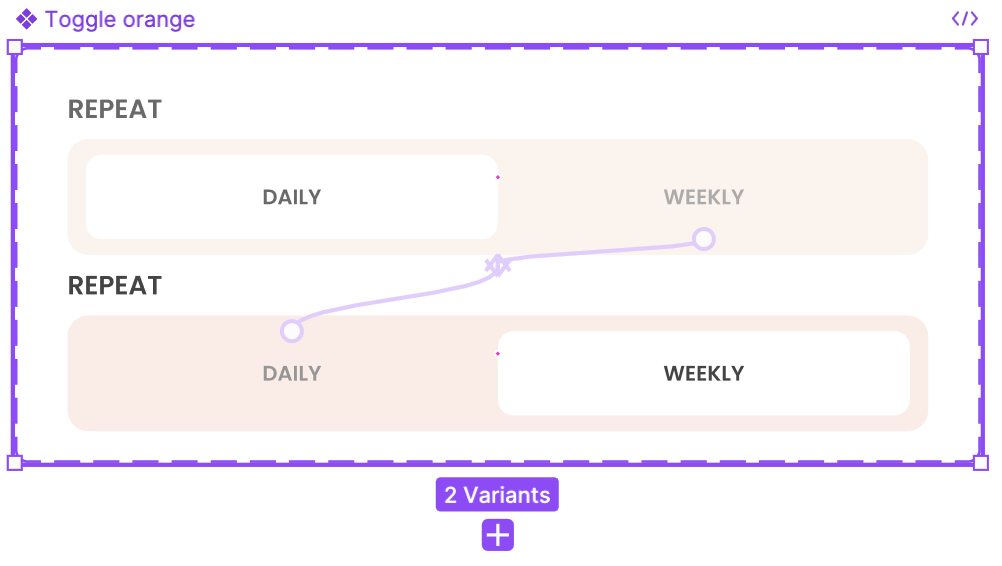
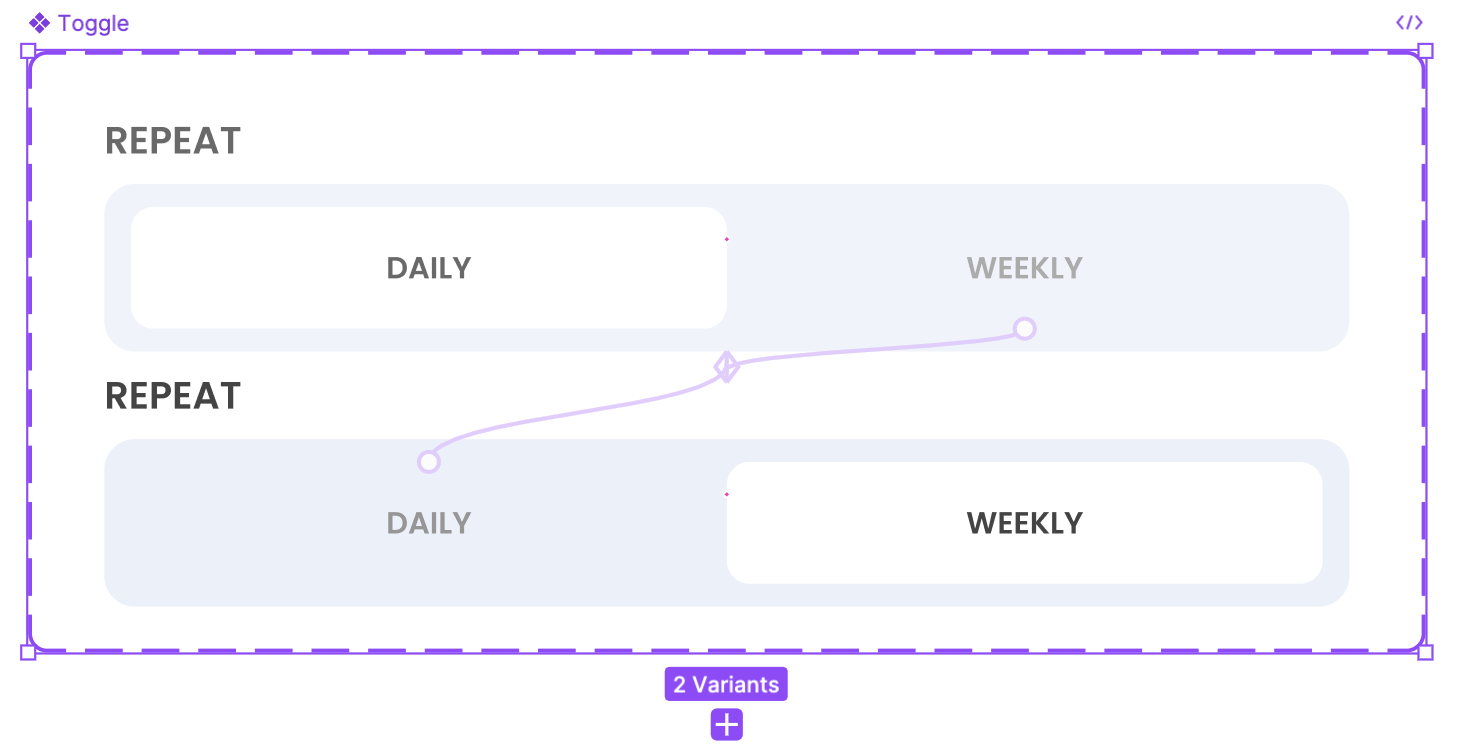
Each deed card was designed with flexibility in mind — customizable names, icons, and repeat settings allowed users to track anything from daily prayers to weekly sadaqah.
Created custom illustrations in Adobe Illustrator
To bring warmth and identity to the app, I designed unique, minimal-style illustrations using Adobe Illustrator. These visuals helped add emotional depth while keeping the overall tone modern and clean.


Understanding the problem
What I Found
- There is no easy way to track: Many people don’t have a simple way to record their daily deeds or spiritual practices.
- Hard to Stay Consistent: Without reminders and easy tracking, it’s tough for people to stick to their goals.
- Lack of Motivation: It’s hard to stay motivated without seeing progress or having something to keep you going.
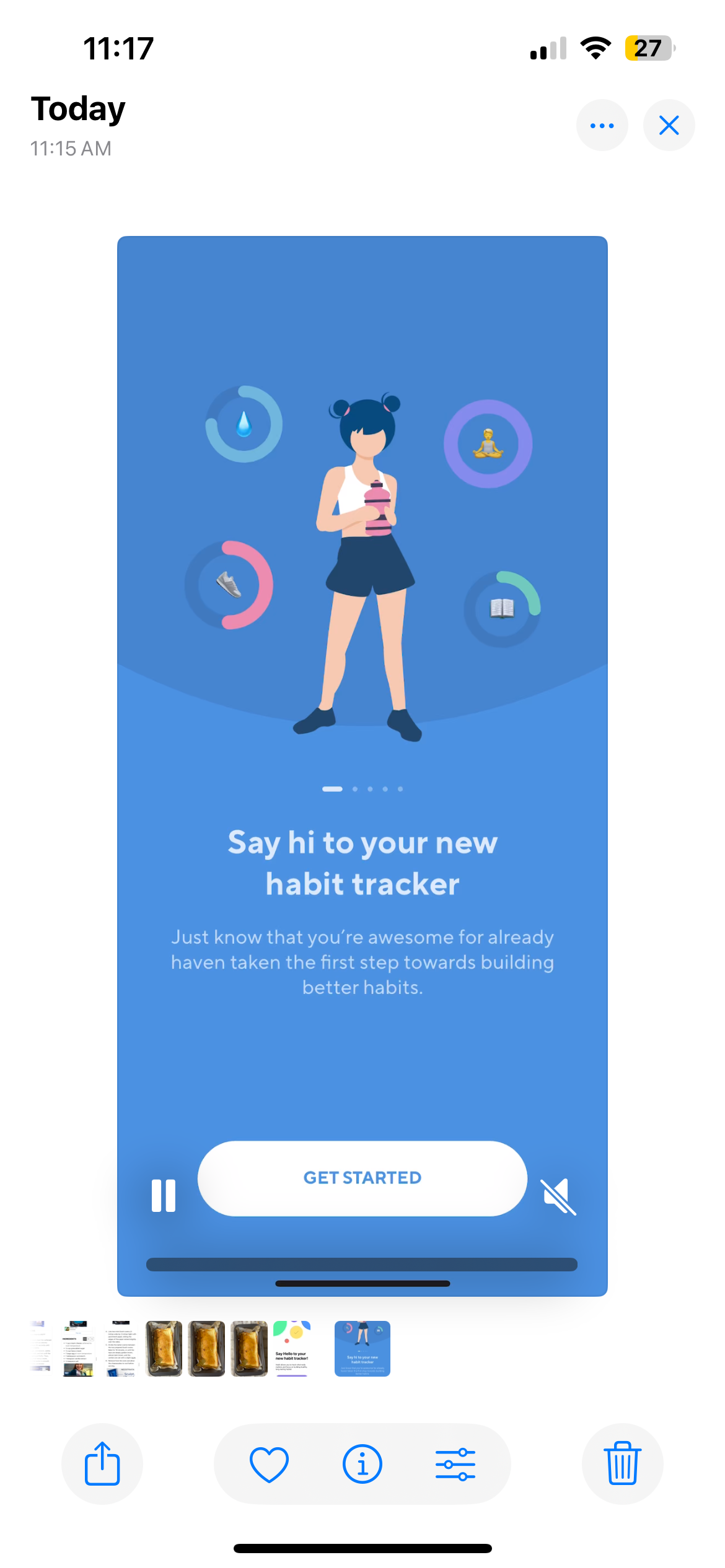
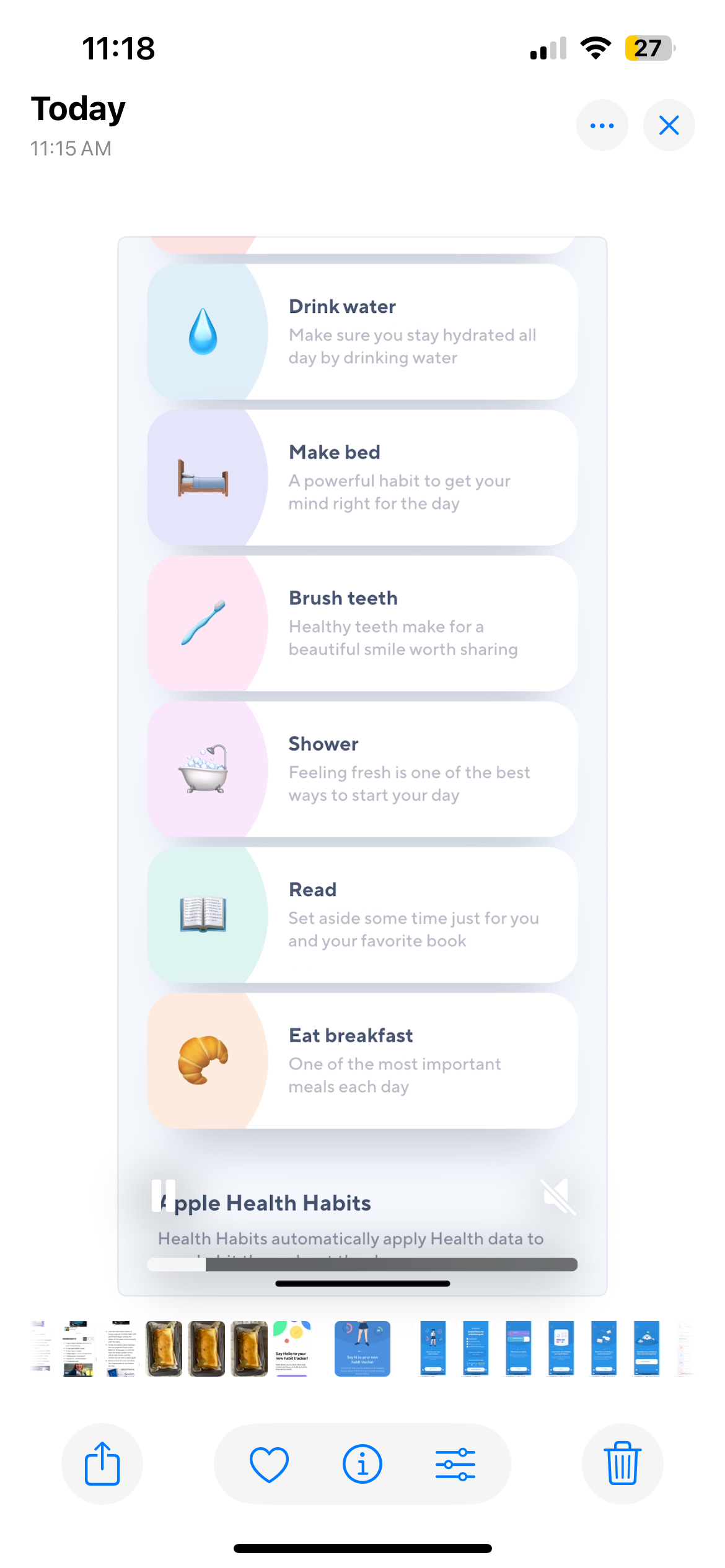
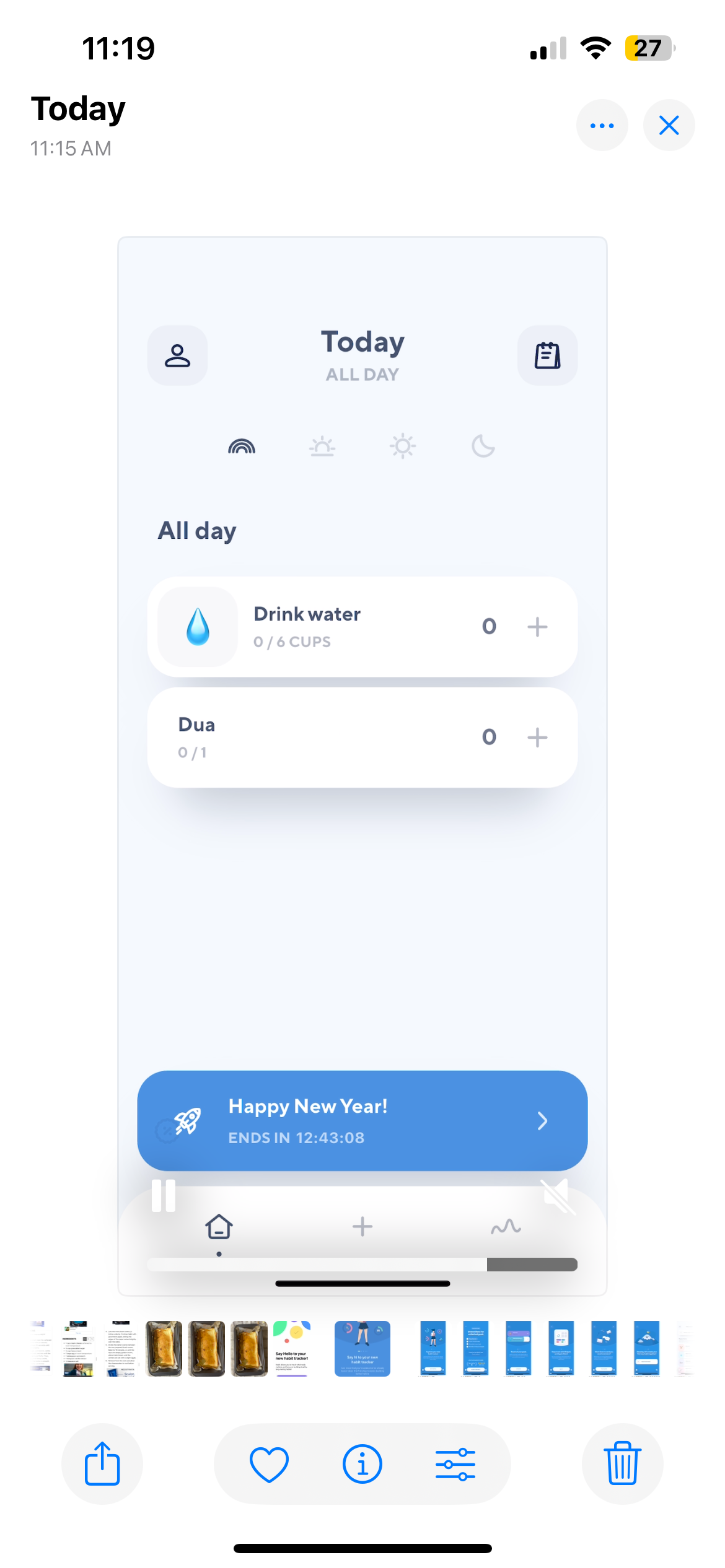
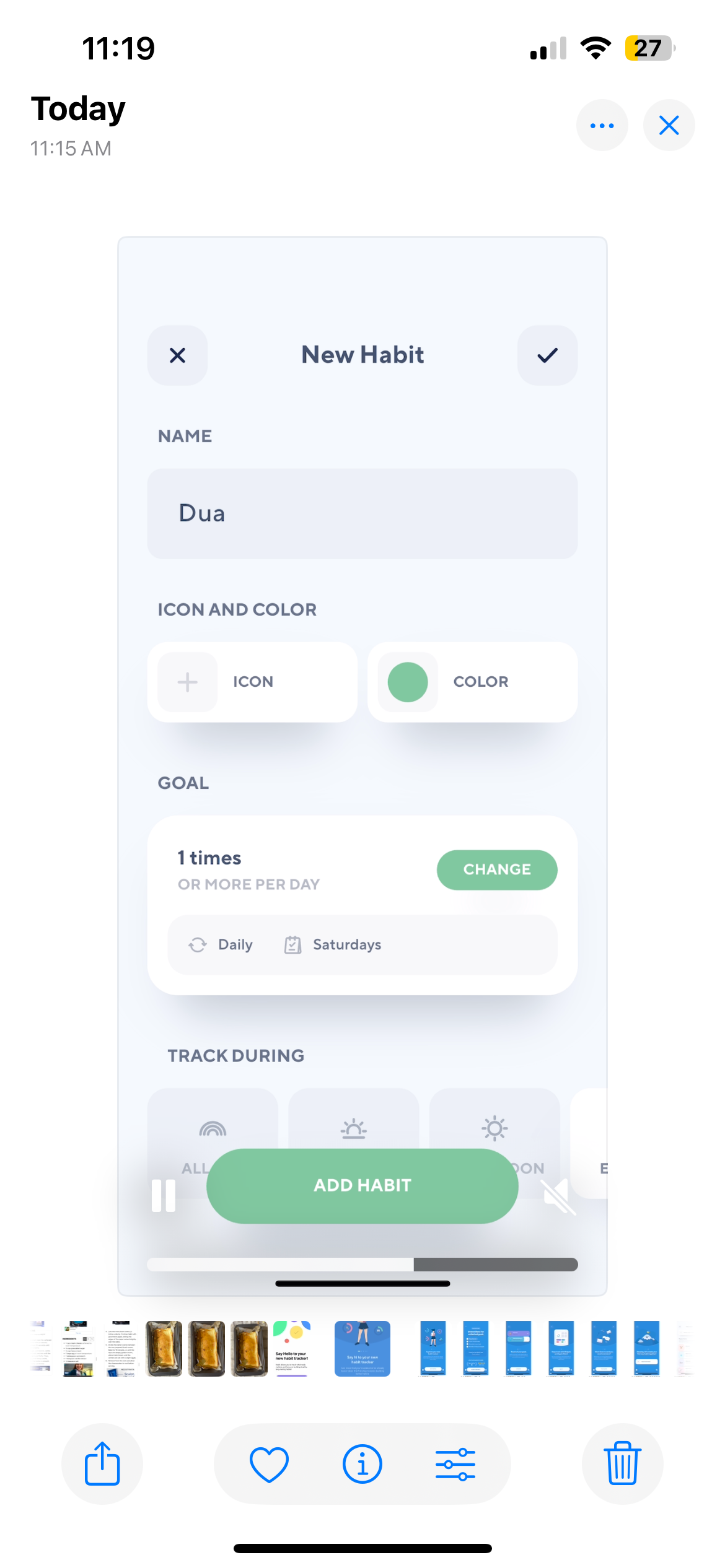
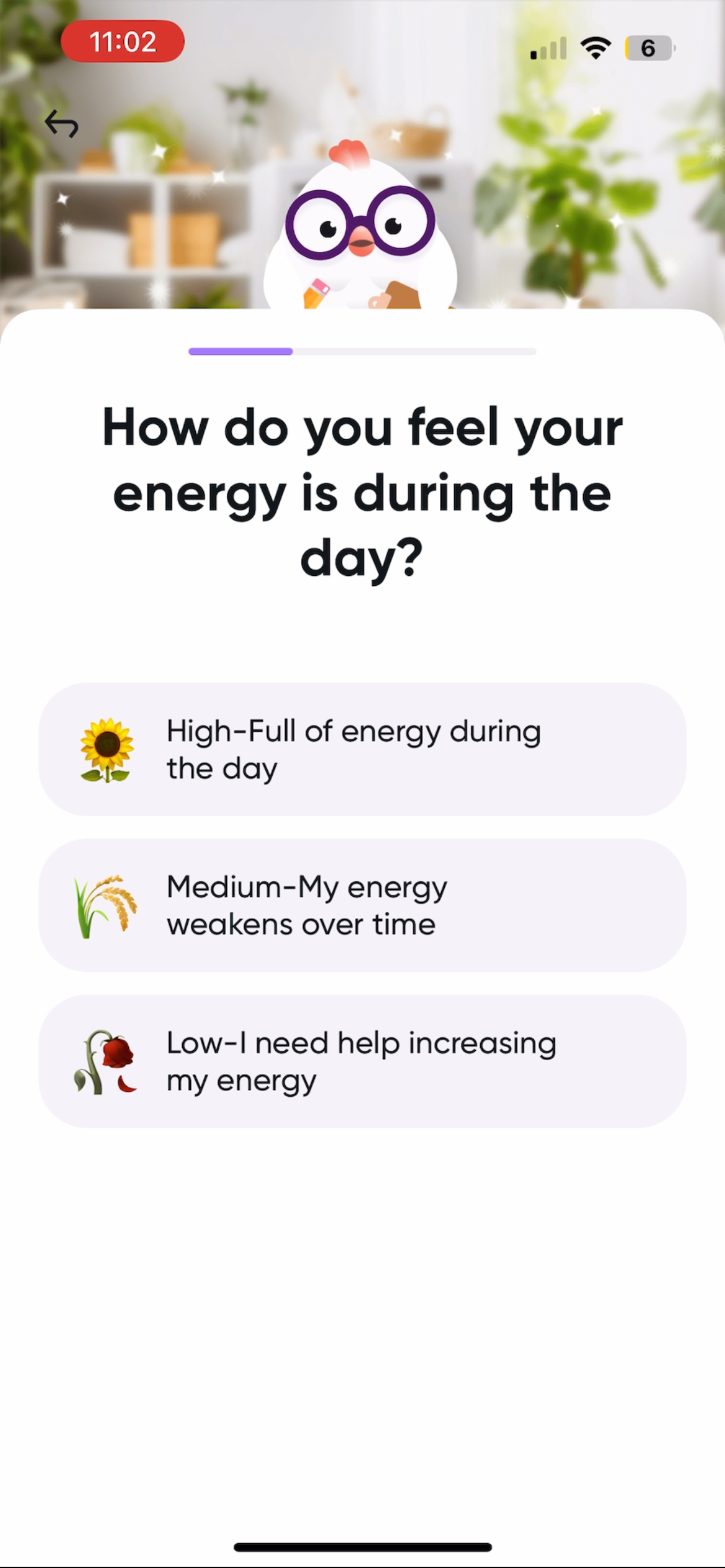
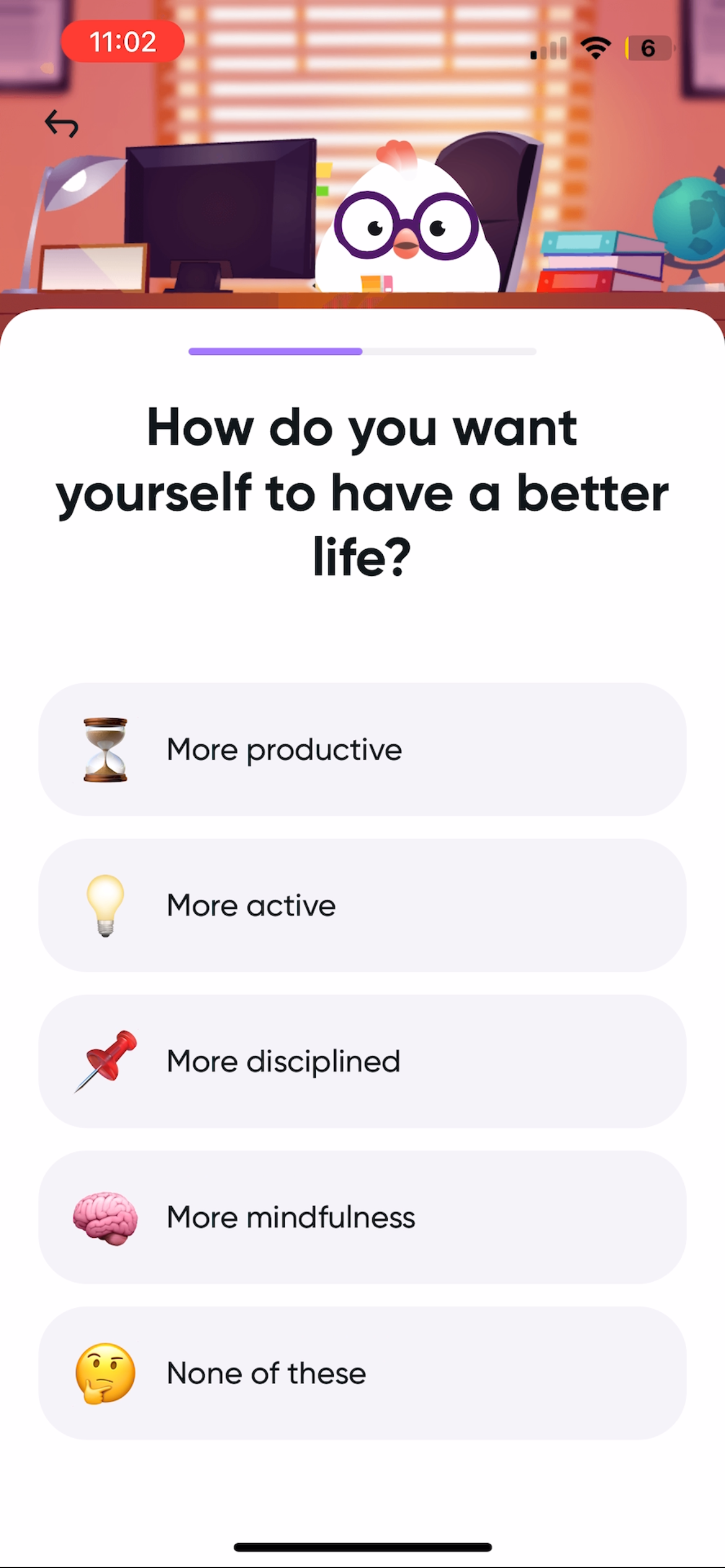
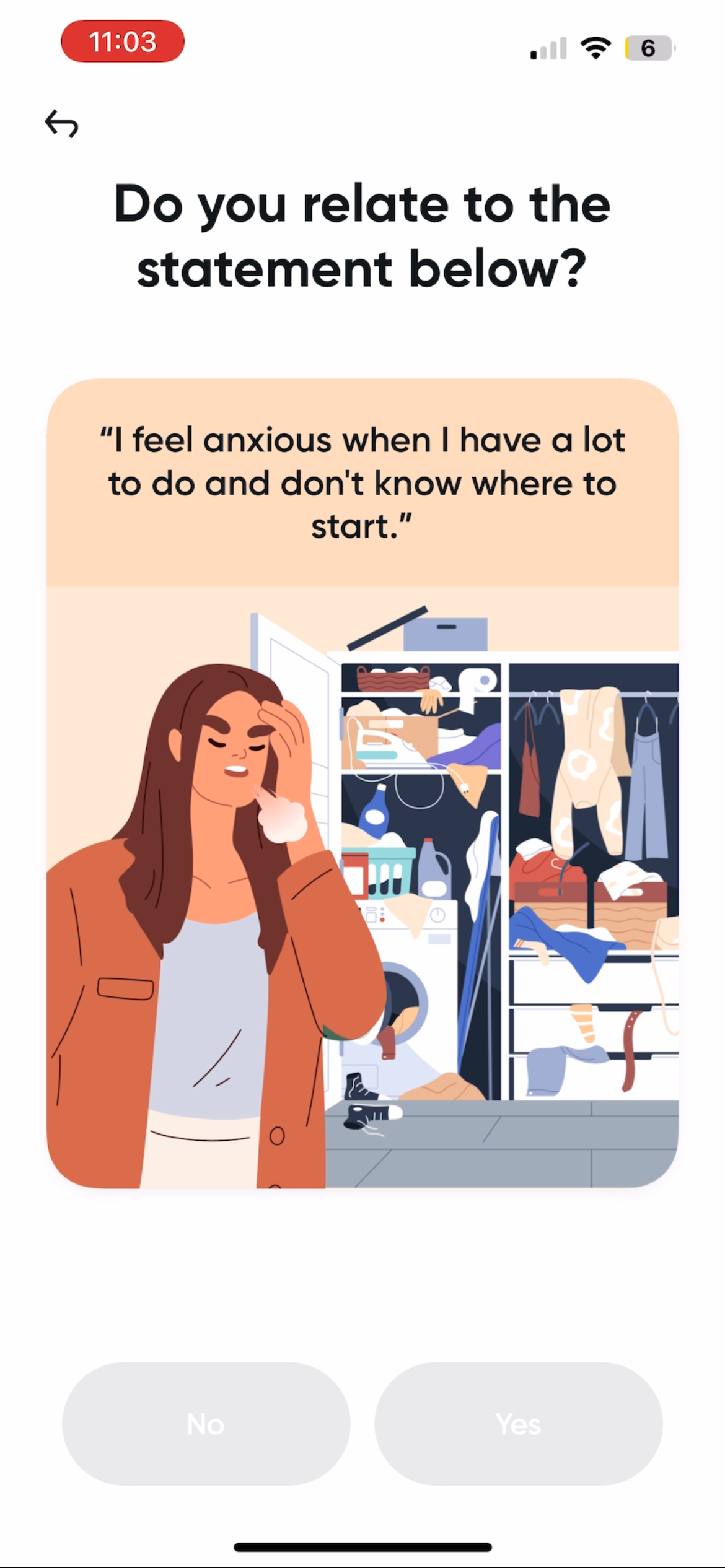
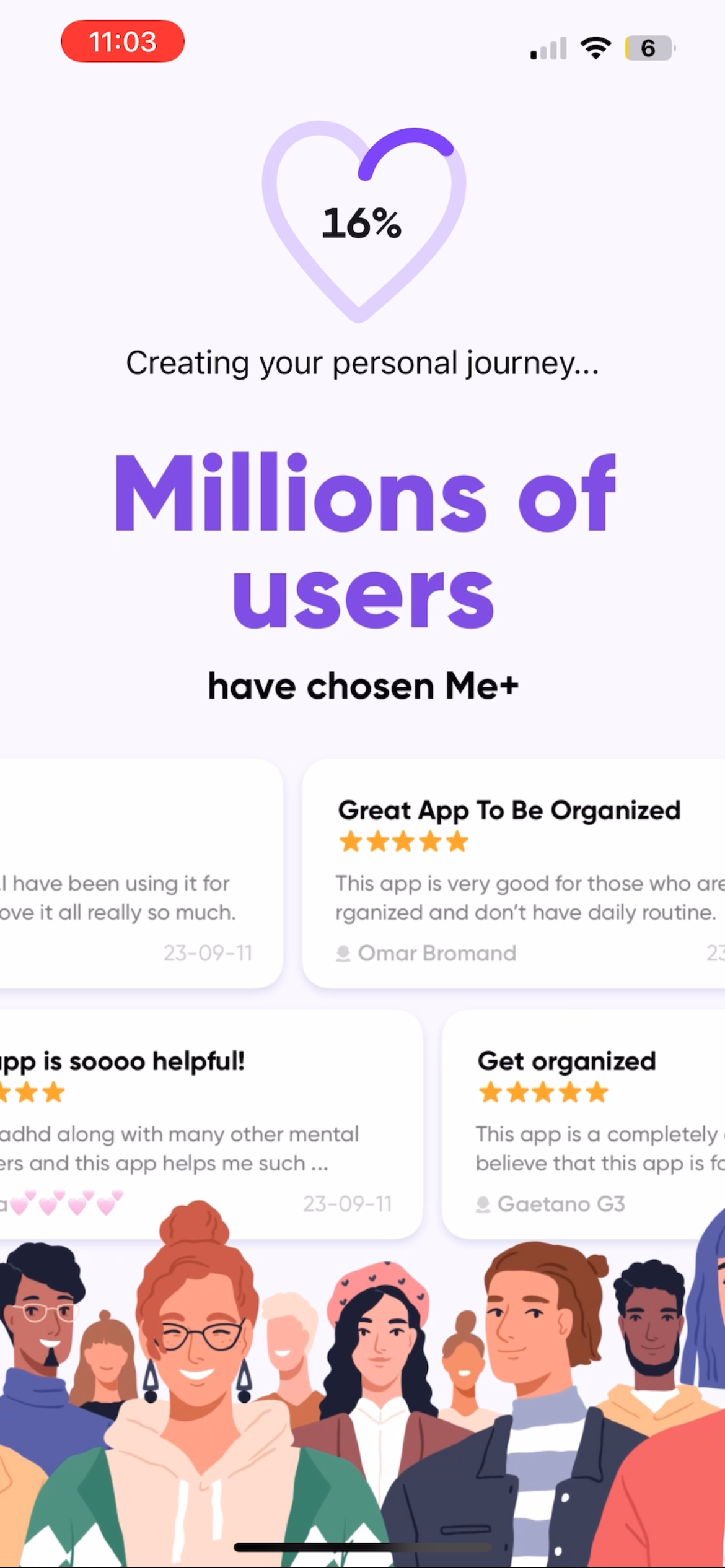
Mood boarding
Deed Tracker is a mobile app designed to help Muslims keep track of their daily spiritual practices, including prayers, supplications.
Key Questions to Consider
Before moving forward, I needed to answer some key questions:
- Am I solving the right problem?
- Who will use the app? (People looking to track and stay consistent with spiritual habits)
- Why is an app the best solution? (It provides structured tracking, reminders, and motivation)
- What core features are needed for a strong first version?
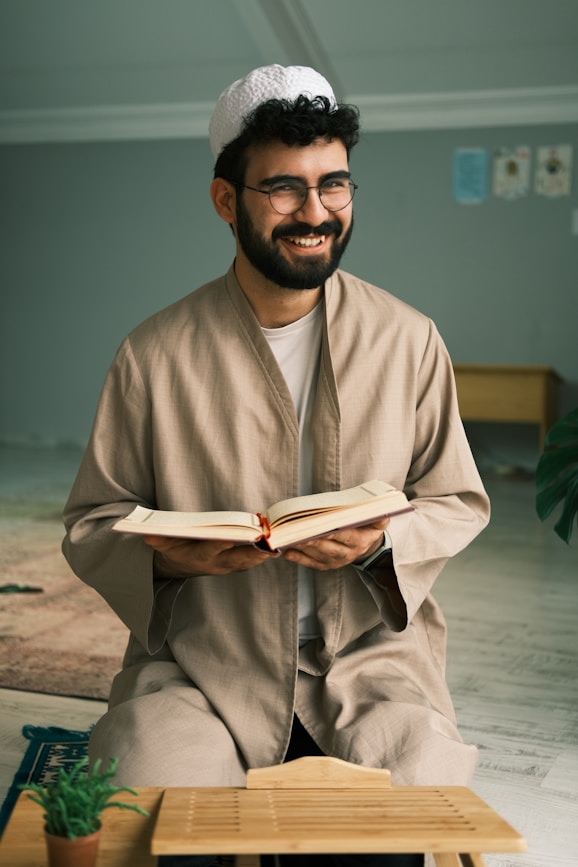
User Persona
Who is this app targetting?
Name
Yusuf Ahmed
Age
20
Location
Toronto, Canada
Occupation
Undergraduate Student
Major
Computer Science
Background
Yusuf was born and raised in Toronto in a Somali-Canadian household. He’s currently studying at Ryerson University (Toronto Metropolitan University). While he’s deeply connected to his faith, balancing school, part-time work, and spiritual obligations can be a challenge.
Interests
- Strengthening their connection with Islam• Tracking habits and spiritual growth (prayers, fasting etc.)
- Using simple, clean, and minimal apps
- Receiving daily reminders or motivational Islamic quotes
• Having a visual dashboard to monitor progress
Frustrations
• Most habit-tracking apps aren’t faith-based
• Forgetting to complete or log deeds during busy days
• No option to customize what deeds matter to them personally
• Generic reminders that don’t feel meaningful- Lack of visual feedback or motivation when tracking progress
Goals
• Be more consistent with salah, dhikr, and charity
- Use a simple app to keep track of spiritual habits without distractions
Secondary Research
After speaking with people in different settings, three key points stood out:
✅ People want something easy to use: A simple, intuitive tracking system is essential.✅ Motivation plays a big role: Streaks, badges, and progress tracking encourage consistency.✅ Personalization is key: Users want the ability to track different deeds based on their spiritual goals.
- By identifying these challenges, I designed Deed Tracker as a personalized, easy-to-use tool to help people stay on top of their daily spiritual habits.
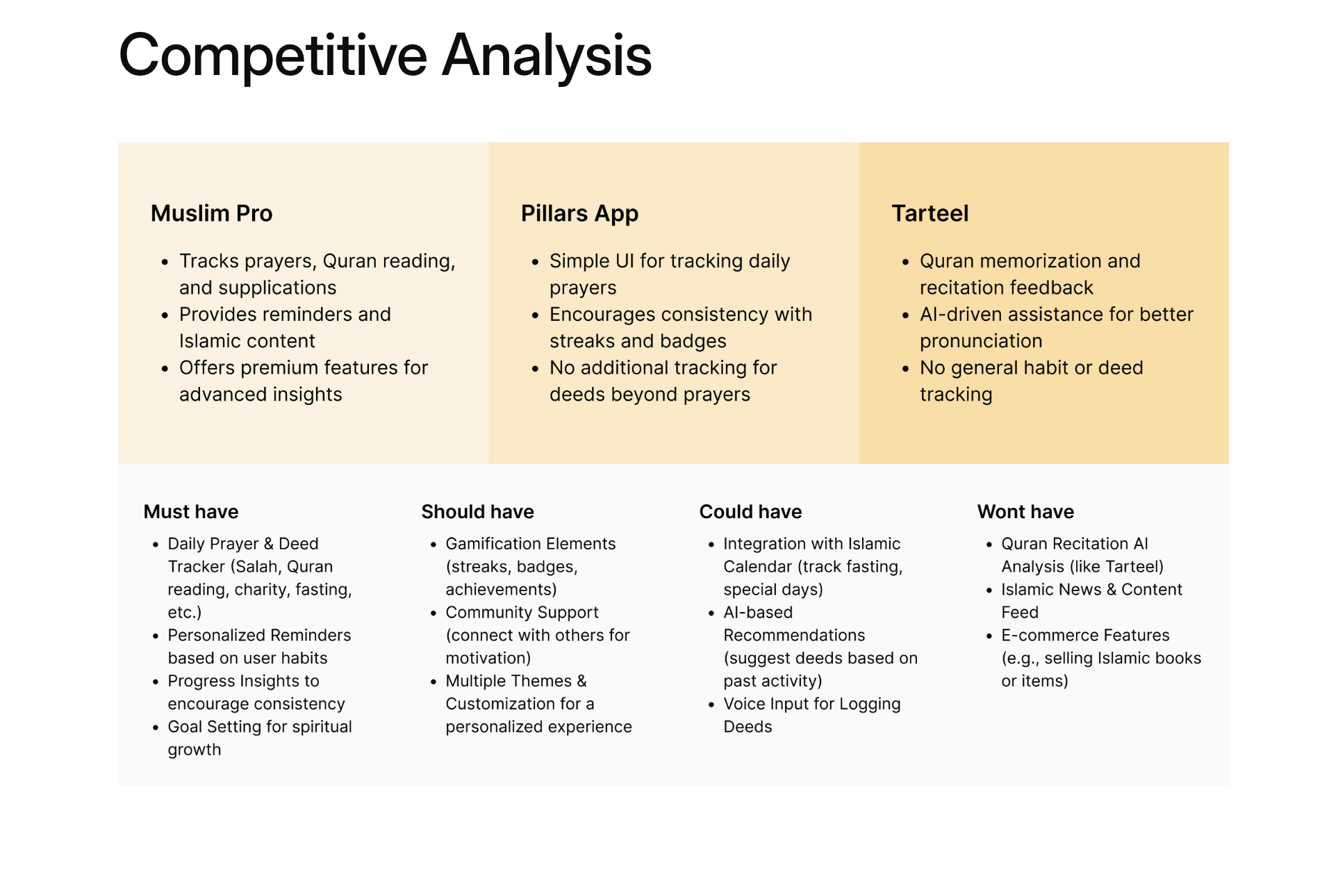
Competitive Analysis
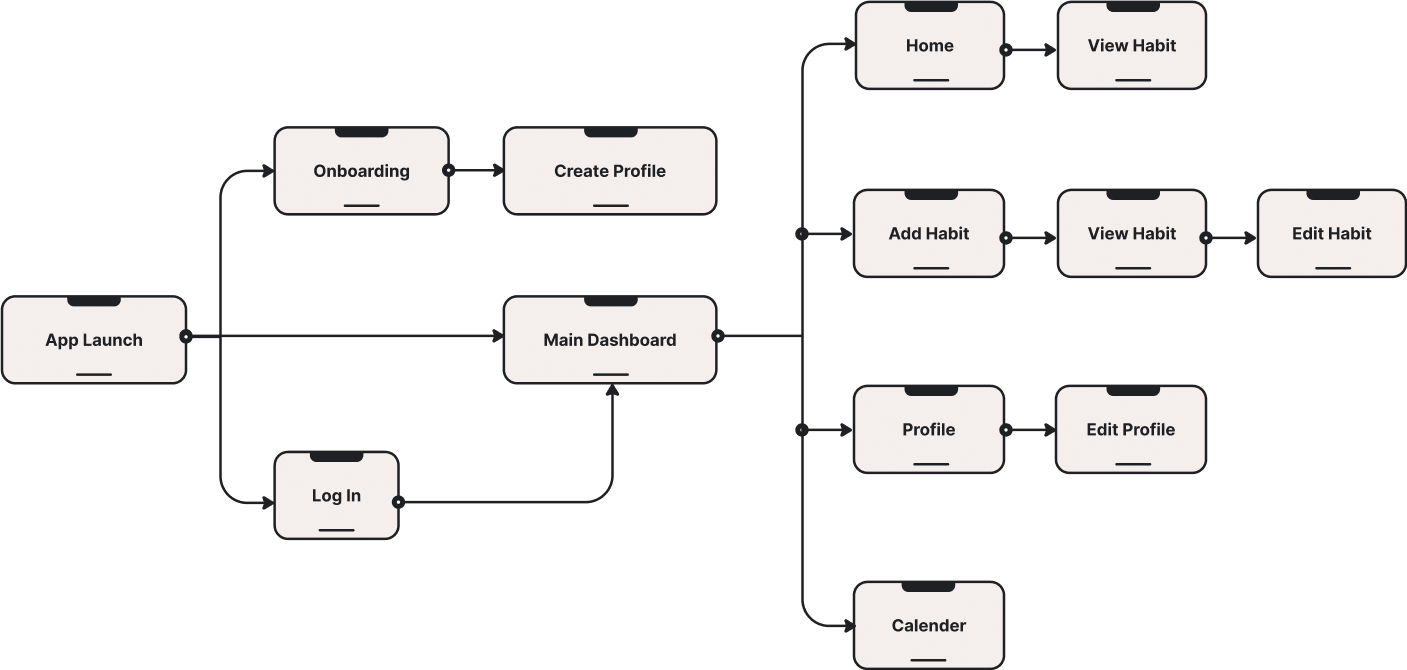
User Flows
Process
Building an interactive app
Creating a spiritually mindful app meant designing with both clarity and compassion. I focused on building modular, reusable components that supported quick, intuitive tracking while respecting the tone of Islamic spiritual habits.
This approach made the app consistent across screens, allowed easier scaling later, and reduced cognitive load for users who were already managing busy schedules and personal goals.
Low Fidelity Wireframes
Before diving into detailed design, I started with low-fidelity wireframes to quickly map out the user journey and screen layouts. These rough sketches allowed me to focus purely on functionality and user flow, without getting caught up in visuals or styling.
Upcoming deeds
Completed deeds

Upcoming deeds

Looking to improve your connection with Allah (s.w.t)
Looking to improve your connection with Allah (s.w.t)
Get Started

Looking to improve your connection with Allah (s.w.t)
Looking to improve your connection with Allah (s.w.t)
Get Started
What would you like to name your deed?
Visiting the mosque
Select whether you are a brother or a sister?


Continue


New deed
Select icon and color
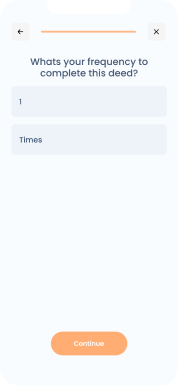
Select frequency
Goals
Visiting the mosque
M
T
W
T
F
S
S
Results
A Spiritual Tool Designed for Daily Progress
The final design focused on creating a clean, approachable experience that makes tracking daily spiritual actions easy and motivating. Whether it’s prayer, charity, or habits, each element was designed to gently guide users toward progress without pressure.
Built for Growth
The concept was well received during feedback sessions — praised for its simplicity, clarity, and focus. It lays the groundwork for future development, with potential to grow into a widely used tool that supports spiritual discipline and positive daily routines.
8:00

8:00

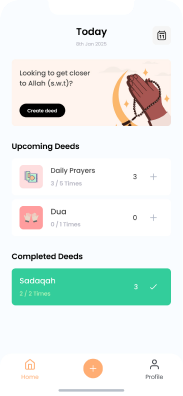
Track and manage daily deeds
- Log prayers, charity and supplications in one place.
- Simple, one-tap tracking for quick updates.
- Personalized categories for flexible tracking.
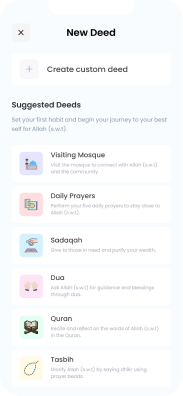
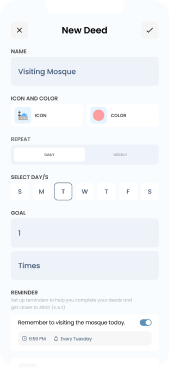
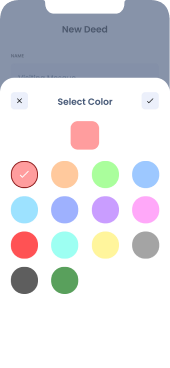
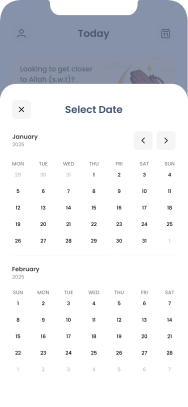
Set your dates and reminders for each deed
8:00

8:00

8:00

Set your dates and reminders for each deed
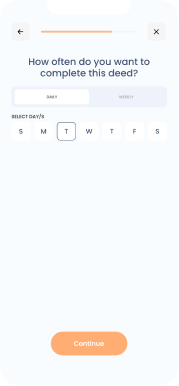
- Customize and track any spiritual or personal habit.
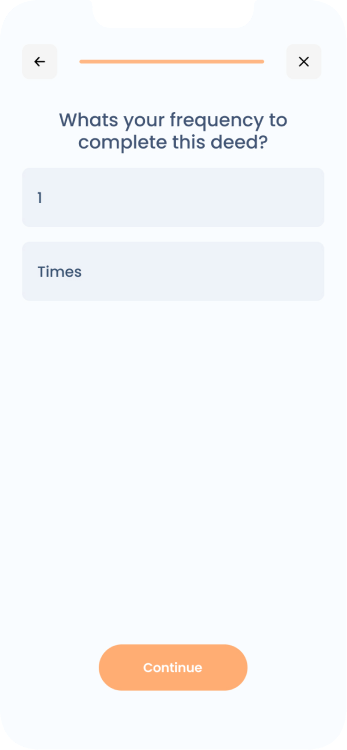
- Set your own categories, goals and frequency to match your needs
8:00

8:00

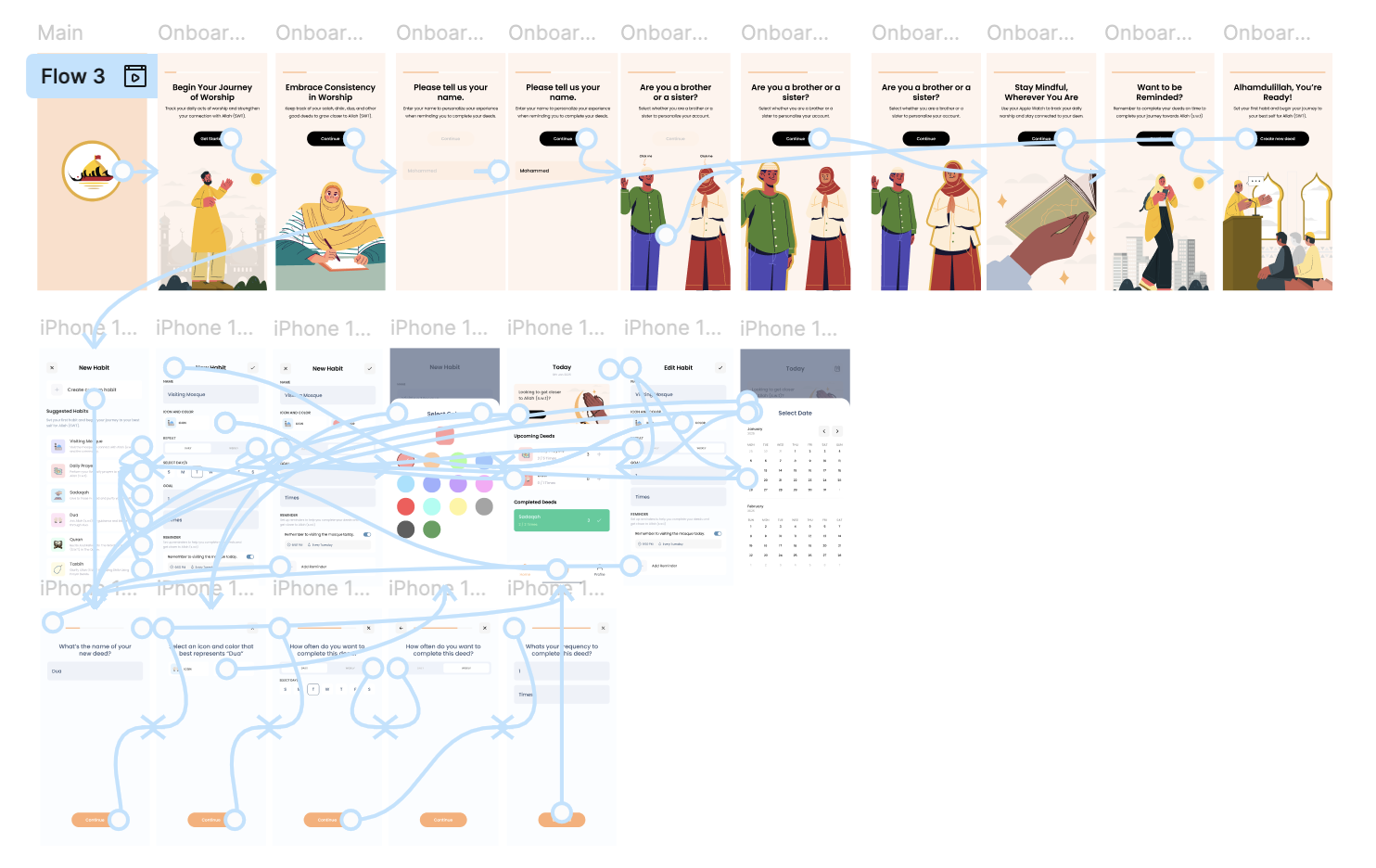
Prototyping
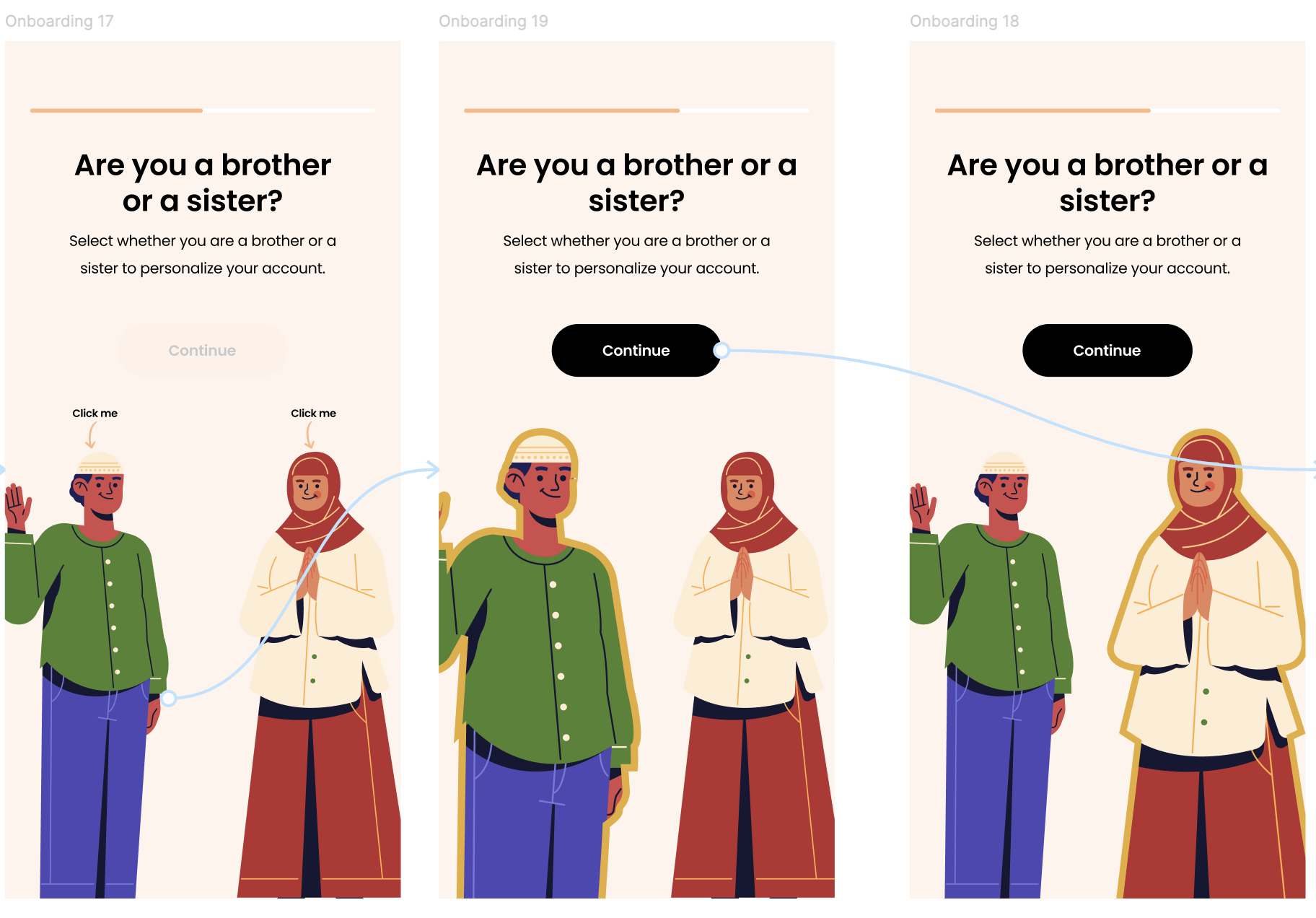
I began by animating components like buttons, transitions, and pop-ups, ensuring the interface felt reactive and visually engaging.
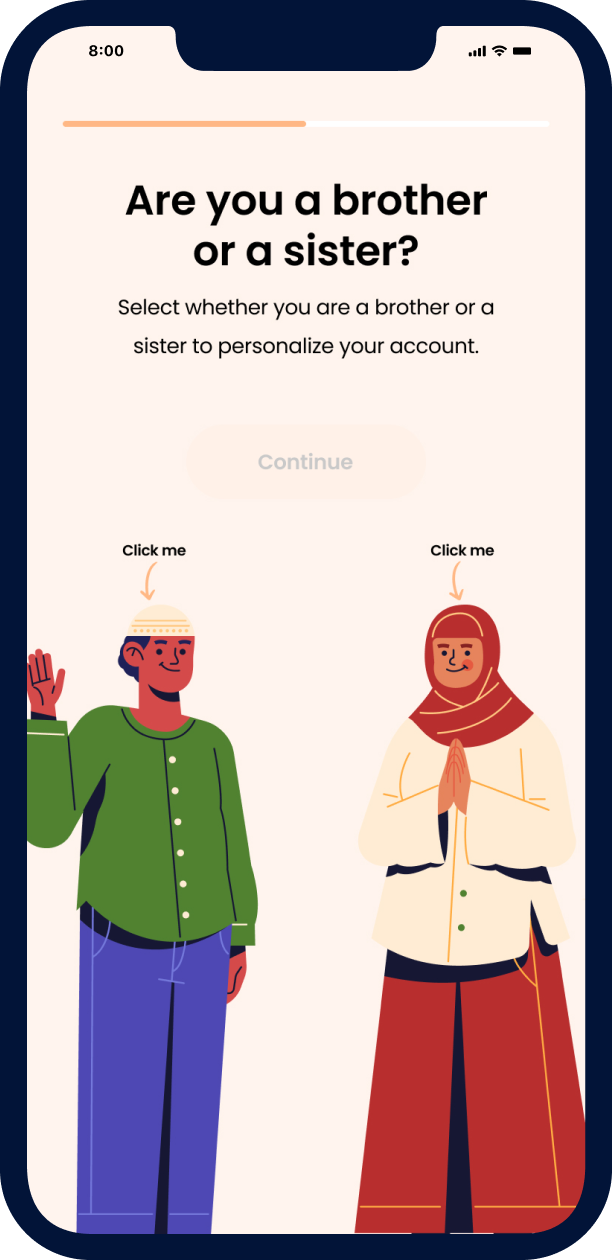
Using Figma’s interactive prototyping tools, I designed an animation where clicking on the boy triggers a smooth interaction — the character pops up slightly, gets a yellow highlight stroke, and scales up in size. This visual cue clearly indicates selection, adding both clarity and delight to the user experience.
Reflection
Designing for a Diverse Muslim Audience
Building an app for spiritual tracking meant designing with empathy and inclusivity. It was important to ensure the interface felt calm, respectful, and welcoming to all users—regardless of how practicing they were.
Micro-Interactions Made the Difference
One of the most impactful design choices was adding subtle animations—like the pop-and-highlight effect when selecting a character. These micro-interactions made the experience more engaging, helping users feel a personal connection with their selections. It taught me how small visual cues can significantly elevate user feedback and usability.
Prototyping in Figma Opened Up New Ideas
Using Figma for interaction design allowed me to test flows quickly and gather feedback early. While I only used it for prototyping, it helped me bring ideas to life and test small details like the character selection animation. This process showed me the value of rapid iteration and user-driven design, something I’ll keep building on.
← Home
Deed Tracker

Project
App Design
Timeline
2 Months
Tools
Figma • Adobe Illustrator
Problem
The Challenge: Staying Consistent in a Busy World
From prayers and duas to charity and good habits, maintaining a daily spiritual routine is a personal goal for many Muslims. But in the fast pace of modern life, it’s easy to forget, lose track, or feel disconnected.
Most tools out there aren’t built with faith-based routines in mind. They either lack personalization, don’t include reminders, or simply aren’t motivating.

Lack of platforms for tracking Good Deeds

Users need flexible and personalized tracking features

Ensuring a seamless and engaging UI/UX to encourage long-term use
Most habit trackers aren’t built for spiritual intention.
There are plenty of generic productivity apps on the market. But they’re often too gamified, too cluttered, or too disconnected from the values and rhythm of a Muslim lifestyle.
The lack of a faith-centered, thoughtfully designed experience leads to inconsistent use or no use at all.
8:00

8:00

Say hello to Deed Tracker!
Solution
A personalized space to build habits that matter.

Deed Tracker fills the gap with a clean, minimal app that focuses solely on spiritual habits. Users can log their deeds, set custom reminders, and visualize their consistency — all in a calming, distraction-free interface designed for self-reflection.
8:00
8:00
Set daily goals and track them
Process
Building an interactive app
Creating a spiritually mindful app meant designing with both clarity and compassion. I focused on building modular, reusable components that supported quick, intuitive tracking while respecting the tone of Islamic spiritual habits.
This approach made the app consistent across screens, allowed easier scaling later, and reduced cognitive load for users who were already managing busy schedules and personal goals.
Each deed card was designed with flexibility in mind — customizable names, icons, and repeat settings allowed users to track anything from daily prayers to weekly sadaqah.
Created custom illustrations in Adobe Illustrator
To bring warmth and identity to the app, I designed unique, minimal-style illustrations using Adobe Illustrator. These visuals helped add emotional depth while keeping the overall tone modern and clean.


Understanding the problem
What I Found
- There is no easy way to track: Many people don’t have a simple way to record their daily deeds or spiritual practices.
- Hard to Stay Consistent: Without reminders and easy tracking, it’s tough for people to stick to their goals.
- Lack of Motivation: It’s hard to stay motivated without seeing progress or having something to keep you going.
Mood boarding
Deed Tracker is a mobile app designed to help Muslims keep track of their daily spiritual practices, including prayers, supplications.
Key Questions to Consider
- Before moving forward, I needed to answer some key questions:
- Am I solving the right problem?
- Who will use the app? (People looking to track and stay consistent with spiritual habits)
- Why is an app the best solution? (It provides structured tracking, reminders, and motivation)
- What core features are needed for a strong first version?
User Persona
Who is this app targetting?

Name
Yusuf Ahmed
Age
20
Location
Toronto, Canada
Occupation
Undergraduate Student
Major
Computer Science
Frustrations
• Most habit-tracking apps aren’t faith-based
• Forgetting to complete or log deeds during busy days
• No option to customise what deeds matter to them personally
• Generic reminders that don’t feel meaningful- Lack of visual feedback or motivation when tracking progress
Background
Yusuf was born and raised in Toronto in a Somali-Canadian household. He’s currently studying at Ryerson University (Toronto Metropolitan University). While he’s deeply connected to his faith, balancing school, part-time work, and spiritual obligations can be a challenge.
Interests
- Strengthening their connection with Islam• Tracking habits and spiritual growth (prayers, fasting etc.)
- Using simple, clean, and minimal apps
- Receiving daily reminders or motivational Islamic quotes
• Having a visual dashboard to monitor progress
Goals
• Be more consistent with salah, dhikr, and charity
- Use a simple app to keep track of spiritual habits without distractions
Secondary Research
After speaking with people in different settings, three key points stood out:
✅ People want something easy to use: A simple, intuitive tracking system is essential.✅ Motivation plays a big role: Streaks, badges, and progress tracking encourage consistency.✅ Personalization is key: Users want the ability to track different deeds based on their spiritual goals.
- By identifying these challenges, I designed Deed Tracker as a personalized, easy-to-use tool to help people stay on top of their daily spiritual habits.
Competitive Analysis
User Flows
Process
Building an interactive app
Creating a spiritually mindful app meant designing with both clarity and compassion. I focused on building modular, reusable components that supported quick, intuitive tracking while respecting the tone of Islamic spiritual habits.
This approach made the app consistent across screens, allowed easier scaling later, and reduced cognitive load for users who were already managing busy schedules and personal goals.
Low Fidelity Wireframes
Before diving into detailed design, I started with low-fidelity wireframes to quickly map out the user journey and screen layouts. These rough sketches allowed me to focus purely on functionality and user flow, without getting caught up in visuals or styling.
Upcoming deeds
Completed deeds

Upcoming deeds

Looking to improve your connection with Allah (s.w.t)
Looking to improve your connection with Allah (s.w.t)
Get Started

Looking to improve your connection with Allah (s.w.t)
Looking to improve your connection with Allah (s.w.t)
Get Started
What would you like to name your deed?
Visiting the mosque
Select whether you are a brother or a sister?


Continue


New deed
Select icon and color
Select frequency
Goals
Visiting the mosque
M
T
W
T
F
S
S
Results
A Spiritual Tool Designed for Daily Progress
The final design focused on creating a clean, approachable experience that makes tracking daily spiritual actions easy and motivating. Whether it’s prayer, charity, or habits, each element was designed to gently guide users toward progress without pressure.
Built for Growth
The concept was well received during feedback sessions — praised for its simplicity, clarity, and focus. It lays the groundwork for future development, with potential to grow into a widely used tool that supports spiritual discipline and positive daily routines.
8:00

8:00

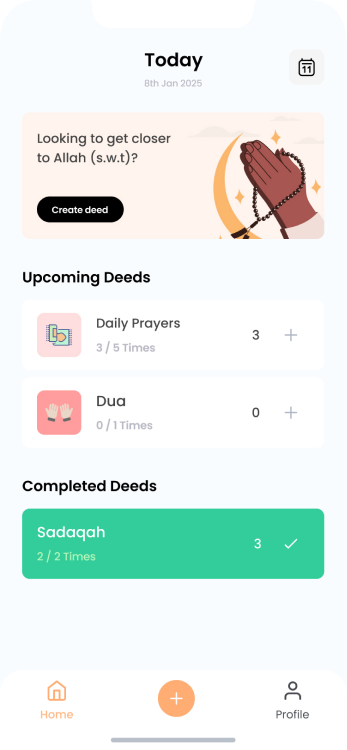
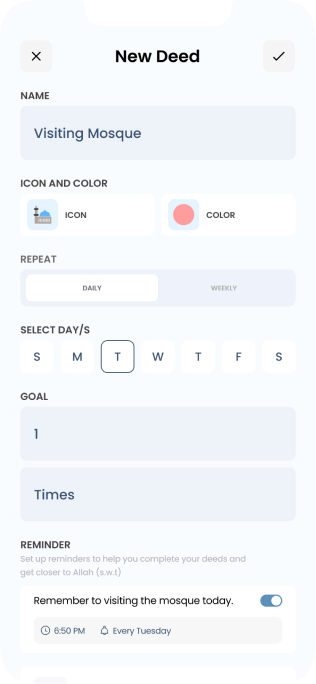
Track and manage daily deeds
- Log prayers, charity and supplications in one place.
- Simple, one-tap tracking for quick updates.
- Personalized categories for flexible tracking.
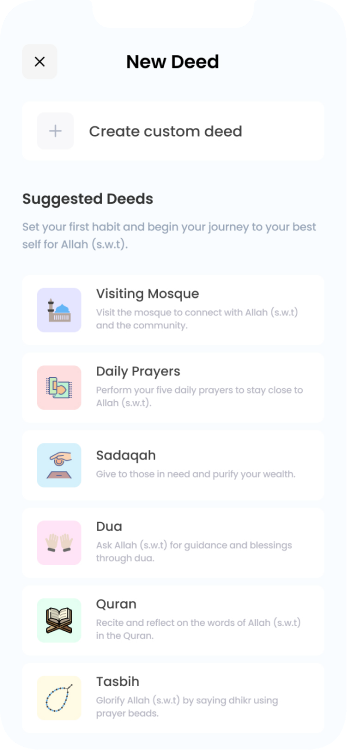
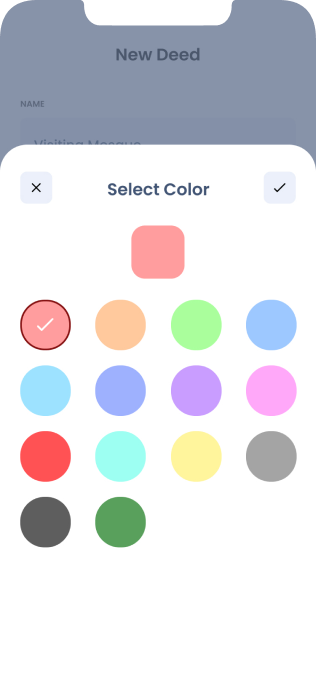
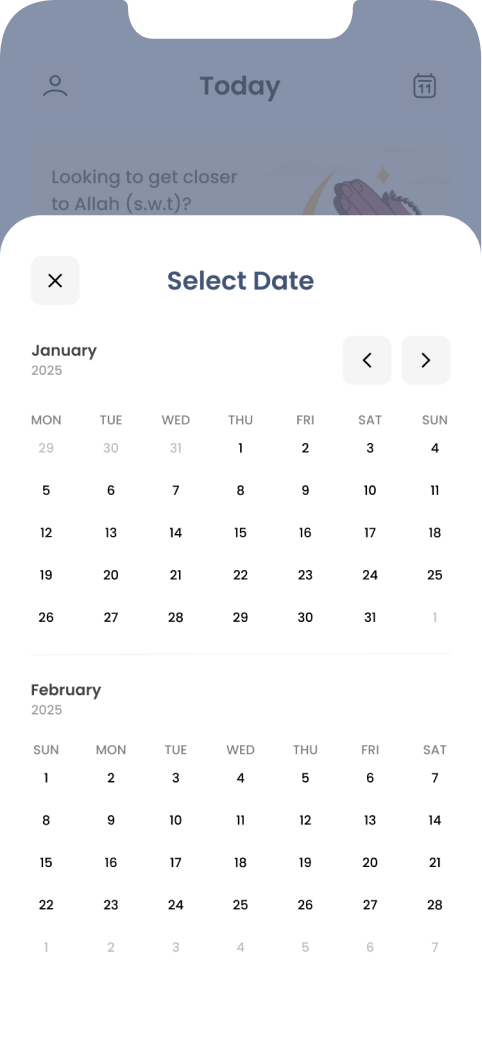
Set your dates and reminders for each deed
8:00

8:00

8:00

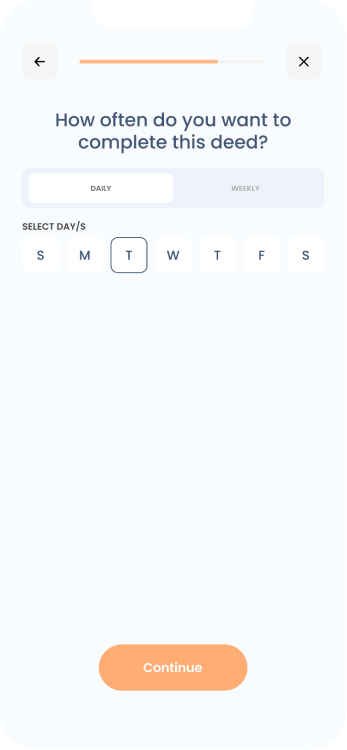
Set your dates and reminders for each deed
- Customize and track any spiritual or personal habit.
- Set your own categories, goals and frequency to match your needs
8:00
8:00
Prototyping
I began by animating components like buttons, transitions, and pop-ups, ensuring the interface felt reactive and visually engaging.
Using Figma’s interactive prototyping tools, I designed an animation where clicking on the boy triggers a smooth interaction — the character pops up slightly, gets a yellow highlight stroke, and scales up in size. This visual cue clearly indicates selection, adding both clarity and delight to the user experience.
Reflection
Designing for a Diverse Muslim Audience
Building an app for spiritual tracking meant designing with empathy and inclusivity. It was important to ensure the interface felt calm, respectful, and welcoming to all users—regardless of how practicing they were.
Micro-Interactions Made the Difference
One of the most impactful design choices was adding subtle animations—like the pop-and-highlight effect when selecting a character. These micro-interactions made the experience more engaging, helping users feel a personal connection with their selections. It taught me how small visual cues can significantly elevate user feedback and usability.
Prototyping in Figma Opened Up New Ideas
Using Figma for interaction design allowed me to test flows quickly and gather feedback early. While I only used it for prototyping, it helped me bring ideas to life and test small details like the character selection animation. This process showed me the value of rapid iteration and user-driven design, something I’ll keep building on.